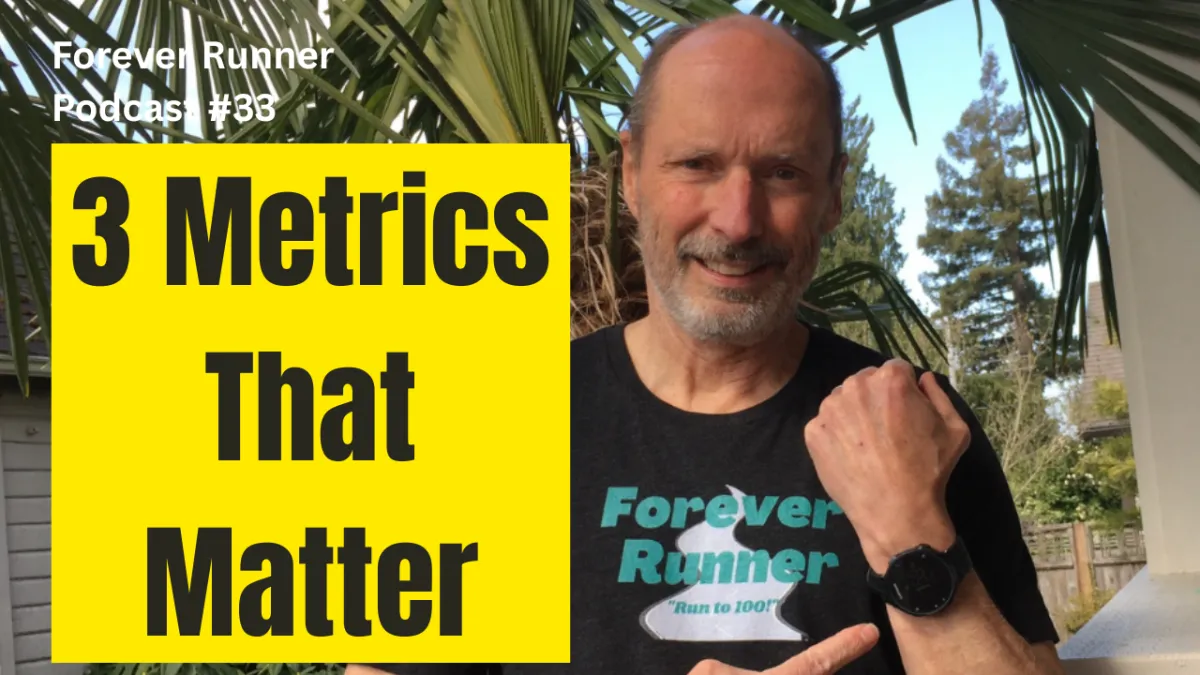
3 Metrics that Matter for Older Runners
Metrics That Matter: 3 Critical Health Checks for Runners
As an older runner, are you keeping track of the right metrics? With all the apps and smart watches these days, there is almost no limit to what data you can capture and measure.
But what if you are missing the most important ones?
In this article, I go over the 3 most important metrics older runners should track, and the first 2 don't come from your watch!
#1 - Percentage of Body Fat:
It amazes me how many marathon runners are over-fat. They have spent months eating well and running hard and they are still carrying a spare tire around their waist.
So how do you tell if you are over-fat?
The simple way to tell is to measure your waist circumference, and compare to your height. To measure, wrap a measuring tape around your waist at the belly button. Your waist circumference should be less than half your height. If your waist circumference is greater than half your height, you are over-fat.
This metric is crucial as it provides insight into whether you're over-fat—a condition that can signify potential metabolic issues.
A more accurate way to determine your actual percentage of body fat is to get a DEXA scan. However, you may not have a facility nearby that offers that, and they can be expensive.
I like to use the Spren phone app. This app scans your body and they send you a report with all your percentages and what the healthy ranges are for your age and sex.
Another good way to do this at home is with an electronic scale. I recommend the Hume Health scale.
If you are over fat or have an unhealthy amount of body fat, you may want to check this on a monthly basis. Otherwise, quarterly or annually is good.
#2 - Percentage of Lean Muscle Mass:
I'm sure you are aware that as we age, we lose muscle mass. However, we don't have to! Adopting an appropriate strength training regime can build and maintain muscle mass as you get older. Knowing your actual lean muscle mass percentage is very important to know if your strength training is on track.
To measure your lean muscle mass percentage, again, you would need a DEXA scan, an app or an electronic scale. They will generate a report for you
With your lean muscle mass percentage, you learn if you are in the healthy or unhealthy range for your age and sex. You can then monitor your actual muscle mass as you age and determine if you are doing enough to build and maintain muscle for optimal health.
You should track this metric by quarter or annually to ensure you remain in your healthy range.
#3 - VO2 Max:
A high Vo2 Max is one of the best longevity/healthspan markers out there.
VO2 Max is a critical metric that evaluates aerobic capacity combined with body weight to gauge overall fitness. It can be hard to find a facility to get this measured and it's expensive, however, modern technology offers more convenient solutions. Devices such as Garmin watches or other fitness trackers can estimate your VO2 Max.
Although these devices might not deliver exact figures, they are valuable for tracking trends and improvements.
Your target should be to maintain a VO2 Max level within the 95th percentile for your age. For example, runners aged 50 to 59 should aim for a VO2 Max of 48.9.
Reaching these targets often requires building a strong aerobic base and including high-intensity workouts in your routine over several months or years. But it's well worth it.
Conclusion:
Tracking these three metrics—Body Fat, Lean Muscle Mass, and VO2 Max—can significantly impact your health span and running performance. Regular monitoring can inform vital decisions in your fitness regime that bolster both your running results and your lifelong health. Adjust your metrics tracking frequency based on your initial statistics and continuously work on improvements where needed. As you refine your approach, you’ll safeguard your overall vitality well beyond your running years.
If you would like to improve any of these 3 critical metrics, let me know. I'm here to help!